
RAID and HDD Recovery Kenya

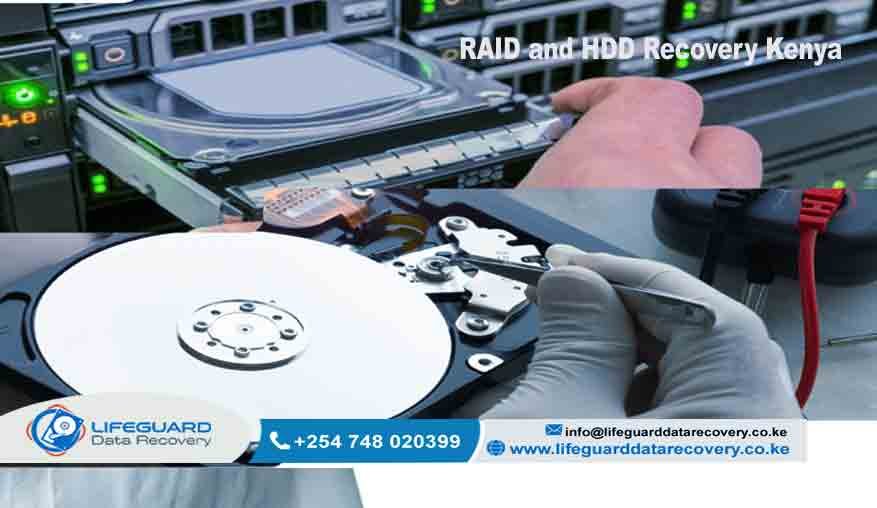
Certified RAID and HDD Recovery Kenya: Professional Data Restoration Services
When the main servers of a Nairobi finance company suddenly go dark, or a photographer in Mombasa hears that dreaded clicking sound from a drive holding years of work, panic sets in fast. In these high-stakes moments, a basic IT fix won’t cut it. You need a specialized laboratory capable of handling RAID and HDD Recovery Kenya. The truth is, data loss feels like a total disaster for your business or personal life, but if you act quickly, it’s usually just a temporary hiccup. We provide a high-tech sanctuary for your storage media, making sure that a hardware crash doesn’t turn into a permanent loss of your digital life.
At Lifeguard Data Recovery Kenya, we know that every hour your systems are down means lost money and massive stress. Our facility is built specifically to deal with the complex storage setups used by modern Kenyan businesses. Whether you are facing a collapsed RAID array in a corporate office or a mechanical failure on a personal laptop, our process stays the same: total precision and complete privacy. Think of us as the bridge between a digital catastrophe and getting your files back. We are the trusted authority for data emergencies across all 47 counties.
[Request Emergency RAID Assessment] | [WhatsApp Technical Support]
- No Recovery, No Charge: If we can’t get your data back, you don’t pay a recovery fee. It’s that simple.
- Secure & Confidential: We use air-gapped systems and strict privacy rules to keep your data safe.
- Certified Engineers: Our team consists of experts trained in deep firmware repair and micro-surgery.
- Fast Turnaround: We offer priority workflows to get your business back on its feet within 24 to 48 hours.
Why Choose Lifeguard Data Recovery Kenya
The world of data restoration has moved way beyond just running a piece of software. To offer the absolute best results for RAID data recovery Kenya, a lab has to truly understand the physics of hardware and the hidden layers of file metadata. A lot of local repair shops will try to “force” a dying drive to work, which usually just scrapes the magnetic coating right off the platters. We do things differently. We stabilize the hardware at the firmware level first, making sure we preserve your data before we even try to extract it.
Think of a failing hard drive like a precision instrument that’s been knocked out of its delicate alignment. Our lab is basically a surgical theater where we restore that balance. We’ve put the work in to acquire proprietary hardware imagers that talk directly to the drive’s internal code. This allows us to skip the standard computer errors that usually cause a drive to crash during a recovery attempt. This hardware-first mindset is exactly why we have the highest success rate in the region for complex storage failures.
In the real world, we also have to deal with the unique environmental issues here in East Africa. From the power surges in Nairobi’s industrial zones to the salty humidity that eats away at servers in Mombasa, our engineers have seen it all. We know the specific ways devices fail in this climate. By choosing a local specialist with world-class gear, you don’t have to deal with the risk or the long wait times of shipping your sensitive drives overseas. Your intellectual property stays right here in Kenya where it belongs.
HDD Data Recovery Services Kenya: Rescuing Mechanical and Electronic Drives
Even though everything is going digital, the old-school spinning hard drive is still the backbone of most storage. The problem is that those moving parts are guaranteed to wear out eventually. Our HDD data recovery services Kenya focus on that tricky balance between physical repair and digital data extraction. If your drive’s motor stops spinning or the read heads crash onto the platters, our team steps in to perform surgery in a controlled environment. This keeps dust from ruining everything and ensures your data isn’t lost forever.
Hard Drive Recovery Nairobi for Local Enterprises
In a city like Nairobi, time is literally money. Our Hard drive recovery Nairobi team is set up specifically to give fast answers to businesses in Westlands, Upper Hill, and the CBD. We know a law firm or an insurance company can’t just sit around for weeks hoping for a solution. Because we are local, you can get your failed drive to us the same day. This lets us start the recovery process immediately so you can get back to work without missing a beat.
RAID Server Recovery Kenya: Enterprise-Grade Solutions
When a whole server rack goes down, we aren’t just talking about a few lost files—we’re talking about your entire business coming to a halt. Our RAID server recovery Kenya department is expert at “virtualizing” arrays that have fallen apart. We don’t actually need your bulky server hardware; just the individual disks. By virtually re-calculating the data patterns, we can rebuild your databases and virtual machines even if the original RAID controller card has physically fried or become corrupted.
RAID 0 Recovery Kenya: The Ultimate Technical Challenge
RAID 0 is built for pure speed, but it has zero safety net. If just one drive in the set fails, everything usually disappears. Getting a successful RAID 0 recovery Kenya done takes a massive amount of technical skill because there is no backup data to use. Our engineers have to manually sync up the data stripes across the repaired disks to put the digital puzzle back together. It’s a high-stakes job, but it’s a process we’ve mastered over thousands of successful cases.
Our Data Recovery Services in Kenya
Expert RAID and HDD Recovery Kenya for All Configurations
Storage technology today is a massive mix of different brands, file systems, and hardware setups. To run a truly professional RAID and HDD Recovery Kenya service, a lab has to speak the “language” of every manufacturer, from Seagate and Western Digital to Toshiba and Samsung. We keep a huge library of over 20,000 donor parts on hand. This includes rare circuit boards and head assemblies so we don’t have to wait for a shipment from abroad while your business is stuck in limbo.
Our skills go way beyond just the average office PC. We regularly work on high-end NAS boxes, SAN arrays, and drives with heavy encryption. In fact, we are one of the few labs in East Africa that can actually get past hardware-level encryption on modern drives (assuming you have the keys). This is a big deal for government offices and big companies in Nairobi that use things like BitLocker or hardware-encrypted drives to keep their secrets safe.
We also love taking on the “unrecoverable” cases—the ones that other shops have already given up on. Whether a drive was dropped, dunked in water, or hit by a power surge during a storm, there is almost always a way back if the platters aren’t physically destroyed. Our mission is to find that path. We use specialized chemical cleaners for rusted boards and ultrasonic baths to get rid of any contamination inside the drive housing.
RAID 1 Recovery Kenya: Mirroring and Mirror-Sync Restoration
You’d think a mirrored setup would be perfectly safe, but software glitches can often mess up both drives at the same time. When you need RAID 1 recovery Kenya, we treat both disks as one project. We figure out which drive has the “cleanest” version of your data and then perform a perfect sector-by-sector clone to a safe destination. This keeps your folder structure exactly the way it was, so you can plug it back in and get moving right away.
High-End RAID 5 and RAID 6 Solutions for Servers and NAS
RAID 5 and 6 are the heavy lifters for most companies in Kenya because they offer a good mix of speed and safety. But if two drives die in a RAID 5, or three in a RAID 6, the whole thing falls over. Our engineers are experts at manual parity reconstruction. We basically do the math to figure out the missing bits of data to fill in the holes left by the dead drives. This lets us pull out entire SQL databases and file folders that most people would assume are gone for good.
How Data Recovery Works (3-Step Process)
Your Roadmap to Successful Failed Hard Drive Recovery Kenya
Trust comes from knowing exactly what’s happening, especially when your most important files are on the line. When you send a device for Failed hard drive recovery Kenya, it doesn’t just disappear into a back room. We follow a very strict, three-step process that meets international standards. This keeps your data safe and speeds everything up. Every single step is logged, and we send you updates so you know exactly where your media is in our secure lab.
The first hour after a drive stops working is the “make or break” window. By following a set workflow, we make sure we don’t make the damage worse. A lot of people don’t realize that just turning a clicking drive on to “see if it works” can cause the heads to scratch the magnetic surface. Once that happens, the data is physically gone. Our process stops this “extra” damage by stabilizing the hardware the moment it arrives.
This organized way of working is why we are the go-to partners for IT managers in Nairobi who need a result they can count on. We treat every recovery like a forensic investigation, making sure the chain of custody is solid and the data stays pure. Whether we’re looking at one laptop drive or a massive 24-bay server, we follow the same rigorous steps to give you the best shot at getting everything back.
Phase 1: Bit-Level Imaging and Hardware Stabilization
As soon as your drive arrives, we give it a non-invasive health check. We use electronic tools to look for short circuits and high-powered microscopes to check for any visible damage. Once we know it’s safe to power up, we use hardware imagers to make what we call a “Golden Clone.” This is a perfect, bit-for-bit copy of your drive. We then do all our work on this copy, leaving your original, fragile drive untouched and safe from any further wear and tear.
Phase 2: Logical Reconstruction and Virtual Stripping
Once we have a healthy clone, our software experts take the lead. For a RAID, this means figuring out the drive order and how the data was striped across them. We “rebuild” the array inside our own virtual environment. This bypasses the need for your original RAID controller, which might be the thing that failed in the first place. This is the stage where we fix corrupted files, repair the drive’s “map” (the MFT), and bring back the original folder names and structures.
Phase 3: Integrity Validation and Secure Data Handover
We don’t call the job finished until we’ve actually checked the data. We don’t just hand you a list of files; we make sure those files actually open and aren’t full of errors. For critical business data like payroll or client databases, we run deep checks to ensure everything is perfect. Once you’re happy, we move the data onto a brand-new, encrypted drive. For clients in Kisumu or Eldoret, we send it via secure courier, or we can set up an encrypted download link for smaller files.
Devices & Storage Types We Recover
Specialized RAID 5 Recovery Kenya for Enterprise Storage
Since RAID 5 is what most medium-sized Kenyan businesses use, we see it in our lab all the time. Our RAID 5 recovery Kenya service is built specifically to handle the “double-drive failure” nightmare. Often, one drive fails months ago and nobody notices; then a second drive dies and the whole system crashes. We are experts at finding that “stale” drive and focusing on the disks that were active right up until the crash. This ensures the data we give back is the most recent version.
We work on all the big NAS brands like Synology, QNAP, and Western Digital MyCloud. These units often use specialized Linux file systems that your average computer can’t even read. Our lab has the specific software tools needed to read these partitions directly, even if the NAS box itself has a fried motherboard or a corrupted operating system. We get to the raw data regardless of the hardware state.
We also look after the high-speed needs of creative agencies in Nairobi. If you’re using RAID 0 or RAID 10 for video editing, those drives are under a lot of heat and stress, which leads to early failure. We offer an “Express” service for the media sector because we know that in production, losing a day of data can ruin a project that cost millions of shillings. We get you back into the edit suite as fast as possible.
Multi-Disk NAS Systems (Synology, QNAP, Buffalo)
Think of a NAS as a tiny server. Most of the time, the failure is actually in the software, not the disks themselves. We can recover data from units that won’t boot, failed after a firmware update, or had volumes accidentally deleted. Our engineers can pull the raw data straight off the disks by reconstructing the underlying RAID pattern, even if the NAS hardware is completely dead and won’t turn on.
Physical HDD, SSD, and Hybrid Storage Architectures
While we are leaders in RAID, we are still the #1 choice for individual RAID and HDD Recovery Kenya needs. We support everything from the big 3.5″ desktop drives to the tiny M.2 NVMe SSDs found in modern MacBooks and ultrabooks. Hybrid drives (SSHD) are particularly tricky because they use both flash memory and spinning disks, but we’ve mastered the “dual-mode” process needed to make sure no data is left behind.
Legacy SAS and SCSI Server Drives
A lot of established companies in Kenya still run on older server gear that uses SAS or SCSI drives. It’s getting harder to find parts for these old systems, but we maintain a huge archive of legacy controllers and donor drives. If your company’s old accounting records are stuck on an aging Dell PowerEdge server that’s started clicking, we have the tools and the experience to get that data moved into a modern, easy-to-use format.
Problems We Solve
Comprehensive RAID 6 Recovery Kenya for Complex Parity Failures
RAID 6 is great because it can survive two drives dying at once, but it isn’t bulletproof. If a third drive fails, or the controller card glitches out, you need a professional RAID 6 recovery Kenya. This is the most mathematically difficult type of recovery there is. Our engineers have to reverse-engineer the complex parity equations to find the missing data blocks. We have successfully saved multi-terabyte arrays for big manufacturers and government offices all over Kenya using these methods.
Often, the issue isn’t even the hardware—it’s the “ghost in the machine.” Software bugs, viruses, or someone accidentally hitting “delete” cause a huge portion of the cases we see. In Nairobi, we’ve seen a big spike in Ransomware where the RAID is fine, but the files inside are locked. While we can’t always break the encryption, we can often find “shadow copies” or deleted versions of files that the virus missed. It’s a vital lifeline for businesses that don’t want to pay a ransom.
Our “security-first” mindset is really important for these cases. Every drive that comes into our lab is scanned for malware in a safe, isolated environment before we ever connect it to our main network. This stops any viruses from spreading and ensures that when we give your data back, it’s clean, safe, and ready to be plugged back into your office network without any risk.
Mechanical Head Crashes and Spindle Seizures
If you hear your drive clicking, grinding, or beeping, that’s a physical mechanical failure. It usually means the read heads are physically touching the platters or the motor is stuck. We perform head replacements and motor transplants inside our Class 100 Cleanroom. This is a space that is actually cleaner than a hospital surgery room. It gives your drive just enough “extra life” so we can extract the data before it dies for good.
Controller Card Failures and RAID Configuration Corruption
Sometimes the drives are 100% healthy, but the “brain” that tells them what to do has died. When a RAID controller fails, the drives look like they are empty or “unallocated.” We use specialized hex-editors and parity tools to manually find the original settings. In effect, we build a “virtual controller” that lets us see your files exactly the way your server used to see them.
Accidental Formatting and Human Error Mitigation
We’ve all been there: you’re trying to update your system and you accidentally format the wrong drive. Human error is one of the biggest causes of data loss in the high-pressure IT worlds of Nairobi and Mombasa. The good news is that as long as you haven’t saved a bunch of new files onto the drive after the format, our tools can usually find the old file markers and bring back your entire folder structure in just a few hours.
Pricing Insight
Transparent Costs for Damaged HDD Recovery Kenya
The question we get most is, “How much is this going to cost?” For Damaged HDD recovery Kenya, the price is based on how much work it takes to fix the drive, not how much data is on it. It takes the same effort to fix a mechanical fault on a 500GB drive as it does on a 2TB one. We use a clear, three-tier pricing model—Standard, Priority, and Emergency—so you can pick the option that fits your budget and your deadline.
We really believe in a “No Surprises” policy. After we check your drive, we give you a fixed quote. That quote covers everything: lab time, donor parts, and the recovery itself. We don’t charge “by the gigabyte” because we think that’s unfair to people with a lot of data. Our goal is to make professional recovery affordable for the Kenyan market while still keeping our high-tech lab running at a world-class level.
For RAID systems, the price depends on how many drives are in the set and how complex the rebuild is. A 4-drive RAID 5 takes more time than a simple 2-drive RAID 1. That said, we offer big discounts if multiple drives have failed, and we offer free evaluations for most storage types. Our “No Recovery, No Fee” promise is your ultimate safety net—if we can’t get your important files back, you don’t pay the recovery fee.
Evaluating Damage Severity vs. Recovery Labor
A “logical” recovery (like deleted files or software bugs) is usually the most affordable since we don’t have to open the drive or buy parts. A “physical” recovery (like a clicking drive or a dead motor) costs more because it involves surgery in the cleanroom and donor hardware. We give you a full report during the evaluation so you understand exactly why your case falls into a specific price bracket.
Flat-Fee Diagnostic Reports for Full Cost Predictability
We offer a flat-fee or, in many cases, a free checkup that gives you a “Recoverable File List.” This lets you see exactly what we can save before you commit to the full cost. This kind of predictability is huge for IT managers in Nairobi who have to explain the cost to their boss or the finance department. You only pay for a result that you’ve already seen and approved.
Expert Advice / Tips
Critical Response for a Failed Hard Drive Recovery Kenya
The minutes right after a drive fails are when most data is actually destroyed—not by the crash itself, but by how the user reacts. To get a successful Failed hard drive recovery Kenya, the most important rule is to STOP. If you hear a weird noise or your RAID says “Failed,” turn the power off immediately. Every second a damaged drive stays on, the risk of the heads scratching the platters goes up. Once those platters are scratched, the data is gone forever.
Lots of people in Nairobi try to use “Free” recovery software they find on the internet. While that might work for a healthy drive where you just deleted a file, it is a disaster for a drive that is physically dying. Software works by scanning every single corner of the drive. If the drive is already weak, that intense activity will kill it completely. Professional tools are “surgical”—they target the most important data first to save it before the drive gives up.
Also, please stay away from the “Freezer Myth” or the “Tap Method.” You might have heard that putting a drive in the freezer brings it back to life, but that’s an old myth that actually causes water to condense on the platters, which ruins the data. Likewise, hitting a drive won’t “unstick” the heads; it will just cause them to gouge the disk surface. When it comes to your data, trust engineering and physics, not internet rumors.
Why You Must Avoid “Rebuilding” a Degraded RAID Array
If your RAID 5 or 6 shows one drive as “Failed,” it’s in “Degraded Mode.” At this point, the remaining drives are working overtime and are under a lot of stress. If you just pop in a new drive and hit “Rebuild,” the intense work often causes a second drive to fail, which kills the whole array. In these cases, it is much safer to clone all the drives first before you ever try a rebuild.
How to Identify Physical vs. Logical HDD Failure
If your computer is just slow, files are missing, or you’re getting “Blue Screens,” you probably have a logical issue or some bad sectors. But if you hear clicking, grinding, or the drive isn’t spinning at all, you have a physical failure. Logical problems can sometimes be fixed remotely, but physical ones must be sent to our Nairobi lab for cleanroom work.
Why Lifeguard is #1 in Kenya
The Leaders in RAID and HDD Recovery Kenya
Lifeguard Data Recovery has become the top name for RAID and HDD Recovery Kenya because we’ve delivered consistent results for over a decade. We aren’t just a computer repair shop; we specialize only in the science of getting data back. Our lab uses the latest PC-3000 systems, which are the global gold standard for data recovery. This lets us work on a drive’s internal code in ways that your average IT department simply can’t.
We are also 100% committed to the privacy of our clients. In a world of data leaks and hacking, we treat your info with the highest level of security. Our lab is a monitored, high-security space, and our engineers are vetted to handle sensitive government and financial records. When you trust us with your drive, you’re getting a partner who values integrity and professional ethics just as much as you do.
Finally, we know that losing data is incredibly stressful. Our customer service team is trained to walk you through everything in plain English, without the confusing tech talk. We act as your guide, making sure you are informed and comfortable at every step. From that first phone call to the moment we hand back your files, we are dedicated to making the process as easy and successful as possible.
Local Presence in Nairobi, Mombasa, and Kisumu for Faster Logistics
Our main cleanroom is in Nairobi, but we’ve built a logistics network that covers the whole country. We offer free pickup and delivery in many parts of the city and have drop-off points in Mombasa and Kisumu. This means that whether you are in the heart of Nakuru or out in a border town like Busia, your drive will get to our experts quickly and safely via our secure courier partners.
Case Study: RAID 5 Recovery Kenya for a Thika Logistics Hub
Earlier this year, a big logistics hub in Thika had a total disaster with their main database server. The server used a 6-drive RAID 5 array that held all their shipping manifests, inventory, and billing data. A power surge fried the RAID controller, and the on-site IT team accidentally “initialized” the array while trying to fix it. This basically wiped the settings and made all the data vanish. This was a high-priority RAID 5 recovery Kenya case that threatened to shut down their whole supply chain.
The client called us in a total panic. We did an immediate check and found that even though the settings were gone, the data was still on the disks. Our engineers manually figured out the data pattern across all six drives. Since the array had been initialized, we had to do a deep scan to find where their SQL databases actually started.
In just 36 hours, we virtually rebuilt the array and pulled out 4.2TB of data. We got their entire database back to exactly how it was minutes before the crash. The company was back in business by Monday morning with zero data loss, saving them millions of shillings in lost time and penalties. This is exactly why you need professionals—it’s the difference between a quick fix and losing your entire business.
Your Questions on RAID and HDD Recovery Kenya Answered
What is the typical success rate for RAID 1 recovery Kenya?
The success rate for RAID 1 recovery Kenya is very high, usually over 99% if nobody has messed with the drives. Since RAID 1 is just a mirror, we only need one of the two drives to be working (or repairable) to get 100% of your data back. Even if both drives were hit by a power surge, we can usually swap parts to get one of them running long enough to clone the files.
Can you perform RAID 6 recovery Kenya if three drives fail?
Even though RAID 6 is only meant to handle two drive failures, a RAID 6 recovery Kenya is often still possible with three dead drives. We do this by physically repairing at least one of the three drives to get the array back to a state where it can be read. It takes careful cleanroom work and perfect timing, but we’ve succeeded in these “impossible” cases many times before.
How long does a Failed hard drive recovery Kenya usually take?
A standard Failed hard drive recovery Kenya usually takes between 3 and 5 business days. But if you are in a huge rush, our Emergency tier can often get it done in 24 to 48 hours. The time mostly depends on how badly the drive is damaged—if we have to do multiple part swaps or clean the platters, it takes a bit more time to make sure we do it safely.
Is it possible to fix a Damaged HDD recovery Kenya after water exposure?
Yes, Damaged HDD recovery Kenya is possible after a drive gets wet, but you have to act fast. If your drive gets wet, do not try to dry it out. When a wet drive meets the air, it starts to rust (corrode). Instead, put it in a sealed bag with a damp cloth and get it to our lab immediately. We use special chemicals to clean the parts and dry them in a vacuum chamber before we try to get the data.
Is my data kept private during the recovery process?
Totally. We follow the strictest privacy rules. Our recovery computers are “air-gapped,” meaning they aren’t connected to the internet, so nobody can hack in. Once you have your data back and have checked it, we wait 14 days to be sure your new drive is working, and then we use military-grade software to wipe your data from our servers forever.
Do I get my old drive back after the recovery?
Yes, we give you back your old broken drive along with the new one holding your data. But we strongly suggest you never try to use that old drive again. Once a drive has failed or had a mechanical crash, it cannot be trusted. We provide your files on a brand-new, high-quality external drive or SSD that is ready to use the moment you get it.
Secure Your RAID and HDD Recovery Kenya Today
Losing your data is a massive crisis, but you don’t have to handle it on your own. Whether you’re an IT manager looking after a huge data center or someone with a lifetime of photos on a laptop, Lifeguard Data Recovery Kenya is here to help. Our focus on RAID and HDD Recovery Kenya is backed by the best tech in the business and a team that truly cares about getting your files back.
Don’t leave your data to chance or take it to a shop that isn’t certified. Every time a broken drive is powered on or handled wrong, the chance of losing everything for good goes up. By choosing Lifeguard, you’re choosing a team that knows exactly what they’re doing. We’ve helped thousands of Kenyans get their data back, and we’re ready to help you too.
Your data is too valuable to lose. Call us now to talk to a specialist and start the process of getting your digital life back. We offer 24/7 support for emergencies because we know that when your data is gone, every second counts.
Critical Urgency: If your RAID is down or your drive is making noise, STOP NOW. Turn off the power and call us immediately to prevent permanent, unrecoverable data loss.
+254 748 020 399 (Emergency Hotline)
info@lifeguarddatarecovery.com
Nairobi Head Office | Serving Nakuru, Eldoret, Thika, and Nationwide.