
Professional RAID Recovery Kenya

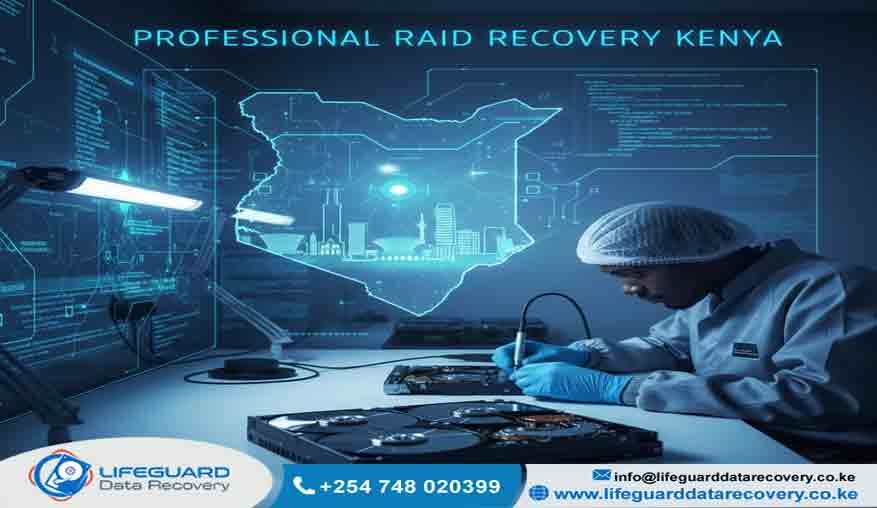
Professional RAID Recovery Kenya Trusted Data Recovery Services
Losing important data from your RAID system can feel really stressful. Business files suddenly disappear, servers slow down, and sometimes you risk losing irreplaceable information. That’s where Lifeguard Data Recovery comes in. We provide professional RAID recovery services across Kenya, helping businesses and individuals get their data back safely and quickly. Our engineers handle all types of RAID failures, RAID 0, 1, 5, 6, and 10, so your data is recovered with as little disruption as possible.
You can request a Free Diagnosis or Call Now for Emergency RAID Recovery and take the first step to getting your data back. We work in secure, controlled environments and always maintain strict confidentiality, so you don’t have to worry about your information being at risk.
Why Choose Lifeguard Data Recovery for RAID Recovery in Kenya
Picking the right data recovery service really matters, especially when your RAID system fails. Lifeguard Data Recovery focuses on reliability, technical know-how, and professional service across Kenya.
Our team is made up of experienced RAID recovery technicians who understand all the tricky parts of modern RAID arrays. Every recovery happens in a secure environment to prevent any further data loss. We follow a clear, step-by-step process so you always know what’s happening. And if it’s urgent, our emergency services make sure we respond fast, helping businesses and individuals avoid long downtime.
Understanding RAID and Common Causes of Data Loss
RAID—short for Redundant Array of Independent Disks is used to improve storage speed and protect data. Even though RAID is designed to be reliable, things can go wrong, which is why professional recovery is so important.
What is RAID and How Does It Work?
RAID combines multiple hard drives into one system to store data either faster or with redundancy. Configurations like RAID 0 (striping), RAID 1 (mirroring), RAID 5, 6, and 10 are common. When a RAID fails, your data might not be accessible even if the drives seem okay individually.
Types of RAID Configurations We Recover
- RAID 0: Striped drives for speed, no redundancy
- RAID 1: Mirrored drives for extra protection
- RAID 5: Balanced speed and fault tolerance with distributed parity
- RAID 6: Double parity for higher fault tolerance
- RAID 10: A combination of mirroring and striping
Common Reasons for RAID Failure in Kenya
- Hardware failure: Drives crash, controllers malfunction, or RAID cards get damaged
- Human error: Accidental deletion, formatting, or wrong rebuild attempts
- Power issues: Unexpected outages or surges affecting multiple drives
- Software corruption or malware: Logical errors, viruses, or file system problems
Knowing these causes can help prevent further damage and improve recovery chances.
Signs You Need Professional RAID Recovery Services
Sometimes, RAID failure doesn’t come with warning signs. But if you notice any of these, it’s time to act:
Inaccessible RAID Array or Drives
If your system can’t recognise the RAID array, it could mean a logical or physical failure.
Strange Noises or Disk Errors
Clicking, grinding, or other unusual sounds are often a sign of drive damage.
Server Crashes or System Failures
Frequent crashes, slow performance, or inability to boot servers may indicate RAID issues.
Partial Data Loss or Corruption
Missing files, unreadable data, or corrupted folders usually need professional attention.
Lifeguard Data Recovery Process for RAID Systems
Our recovery process is designed to maximise your chances of getting your data back while keeping it safe.
Step 1: RAID Diagnosis & Evaluation
We first check your drives to understand the type of RAID failure, whether it’s physical, logical, or both.
Step 2: Safe Drive Imaging & Cloning
We clone the drives in a secure environment to prevent any further damage and preserve the original data.
Step 3: Data Reconstruction from RAID Arrays
Using specialised tools, we rebuild the RAID structure and recover the data from each disk.
Step 4: Verification & Secure Data Transfer
Recovered files are checked for accuracy before being safely returned to you.
Step 5: Ongoing Support and Backup Advice
We give tips to avoid future failures and suggest backup strategies that actually work.
Services We Offer Under RAID Data Recovery
Lifeguard Data Recovery covers a wide range of RAID recovery services across Kenya for both businesses and individuals.
- RAID 0, 1, 5, 6, 10 Recovery: Recover data from all standard RAID types
- Corporate Server RAID Recovery: For business-critical servers and enterprise storage
- NAS and SAN RAID Recovery Services: Specialised recovery for network-attached storage
- Emergency RAID Recovery Services in Kenya: Quick response for urgent cases
- Data Recovery from Corrupted RAID Arrays: Works for logical, physical, or combined failures
Every service is adapted to the client’s needs, whether it’s office files, video footage, or database data.
Why We Are the Best Company for RAID Data Recovery in Kenya
Clients trust Lifeguard Data Recovery because we combine technical skills with practical solutions.
Proven Track Record & Client Testimonials
We help businesses and individuals across Kenya recover important data efficiently. (Insert client testimonials here.)
Advanced Tools & Technology
Our labs use controlled environments and industry-standard tools to recover data safely.
Fast Turnaround for Businesses & Individuals
Urgent cases get priority, so you can get back to work as quickly as possible.
Affordable & Transparent Pricing
Costs depend on device type, complexity, and urgency, and we provide estimates upfront.
Serving Nairobi & All of Kenya
We offer on-site support, pickup services, and remote consultation across Nairobi, Mombasa, Kisumu, Nakuru, Eldoret, and nearby areas.
Frequently Asked Questions About RAID Recovery in Kenya
How much does RAID recovery cost in Kenya?
It varies based on drive type, RAID complexity, and urgency. Contact us for a free evaluation.
Can all types of RAID failures be recovered?
Most failures, both physical and logical, can usually be recovered by professionals.
How long does RAID recovery take?
It depends on the array size and the failure type. Emergency cases get faster handling.
Is my data secure during the recovery process?
Yes, all procedures are done in secure labs with strict confidentiality.
Do you offer emergency or same-day RAID recovery services?
Yes, we respond quickly to urgent cases across Kenya.
Emergency RAID Recovery Services: Get Your Data Back Fast
We provide 24/7 response for critical RAID data loss. Our emergency service includes on-site evaluation, careful handling, and fast recovery, helping you avoid long downtime or permanent data loss.
Contact Lifeguard Data Recovery, Your Trusted RAID Specialists
Reach out through our contact form, WhatsApp, phone, or visit our Nairobi office. We serve clients across Kenya, restoring data safely and efficiently.
Call Now or Request a Free Evaluation to start recovering your RAID data today.
Additional Resources and Data Recovery Tips
- How to Prevent RAID Failures: Keep drives monitored and well-maintained.
- Importance of Regular Backups: Always maintain up-to-date copies of important files.
- Signs of Impending RAID Failure: Strange noises, slow performance, or repeated errors.
- Differences Between RAID Recovery and Regular Hard Drive Recovery: RAID recovery needs special skills to rebuild data from multiple disks.